Scrolling Drives Disconnection for Everybody. No exceptions.
Even people without content contact are being impacted by algorithmic media.
Offline happiness ignored in claims of tech “innovation” successes. Scammy.
I recently got into another debate on Instagram with a stranger.
And, once again, I un-downloaded the app. This time, before leaving, I posted a big idea.
I have only one photo up and it says that algorithmic scrolling causes isolation in all directions.
Until the rise of scrolling, I’ve never heard anyone around me complain about so many new enemies.
Now, even the most peaceful people I know have a handful of growing interpersonal vendettas.
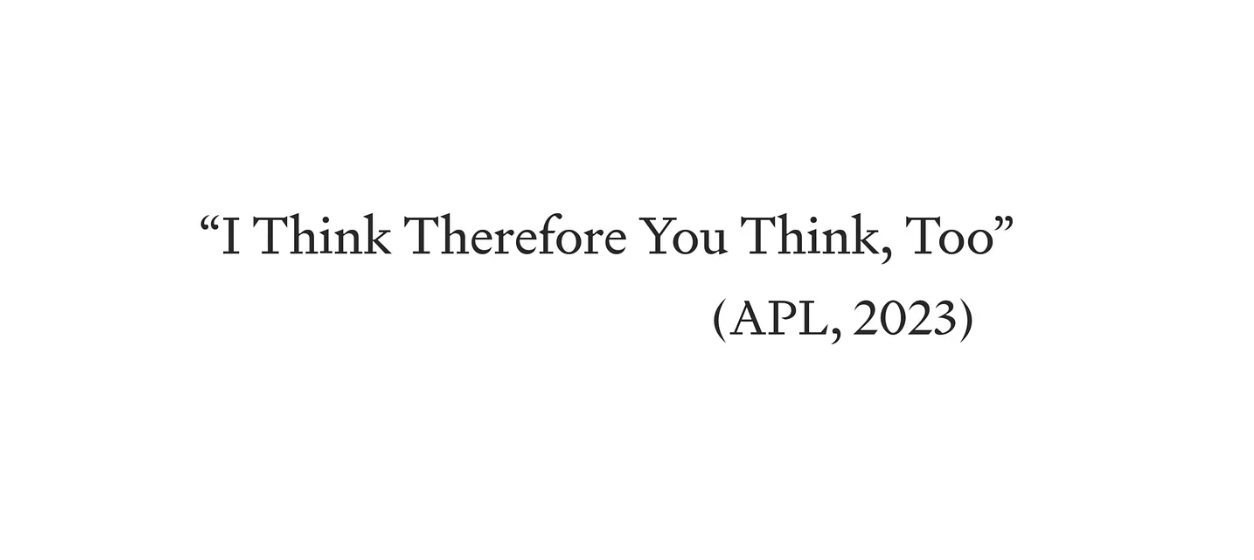
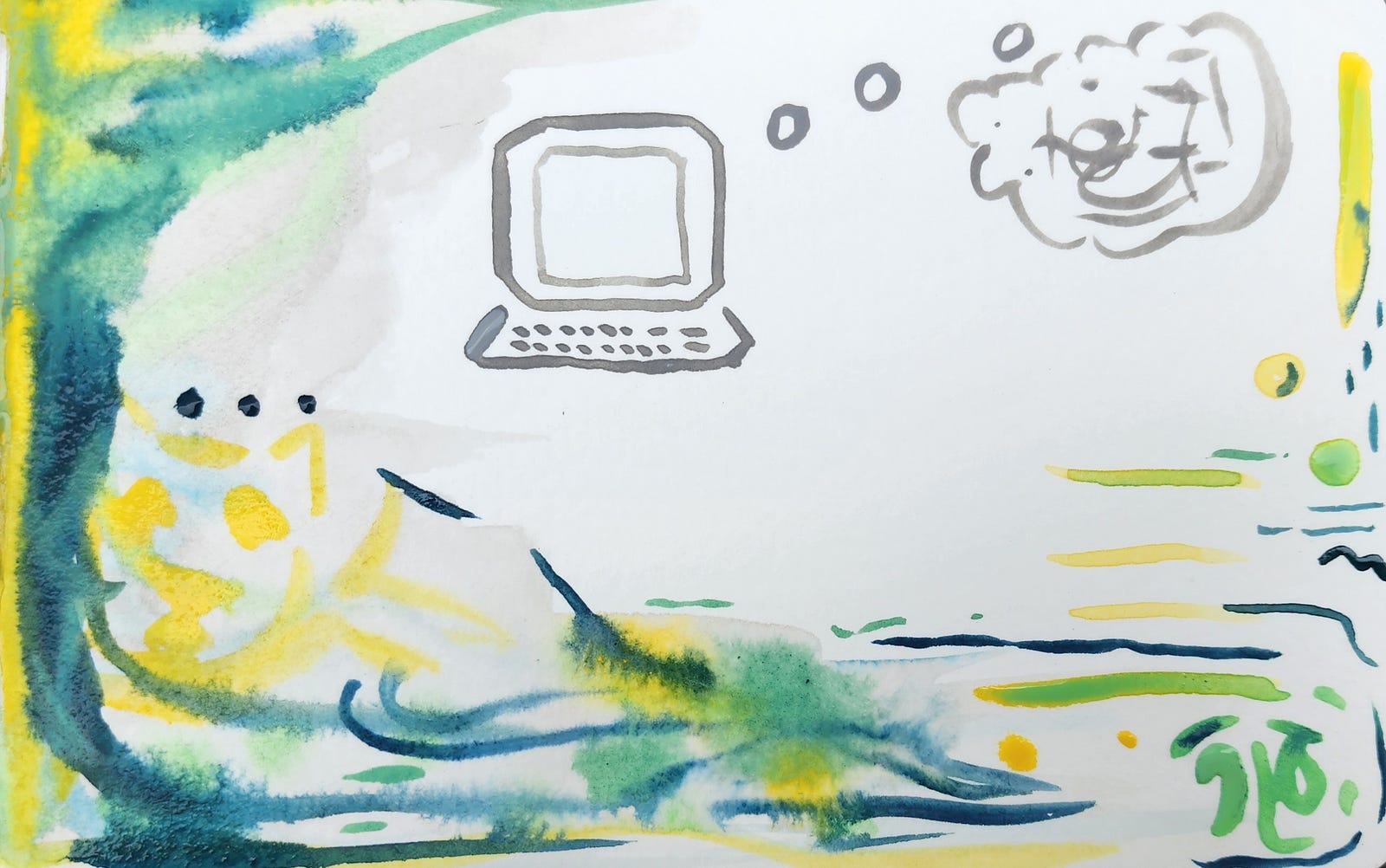
Here’s the homemade meme-photo I posted:
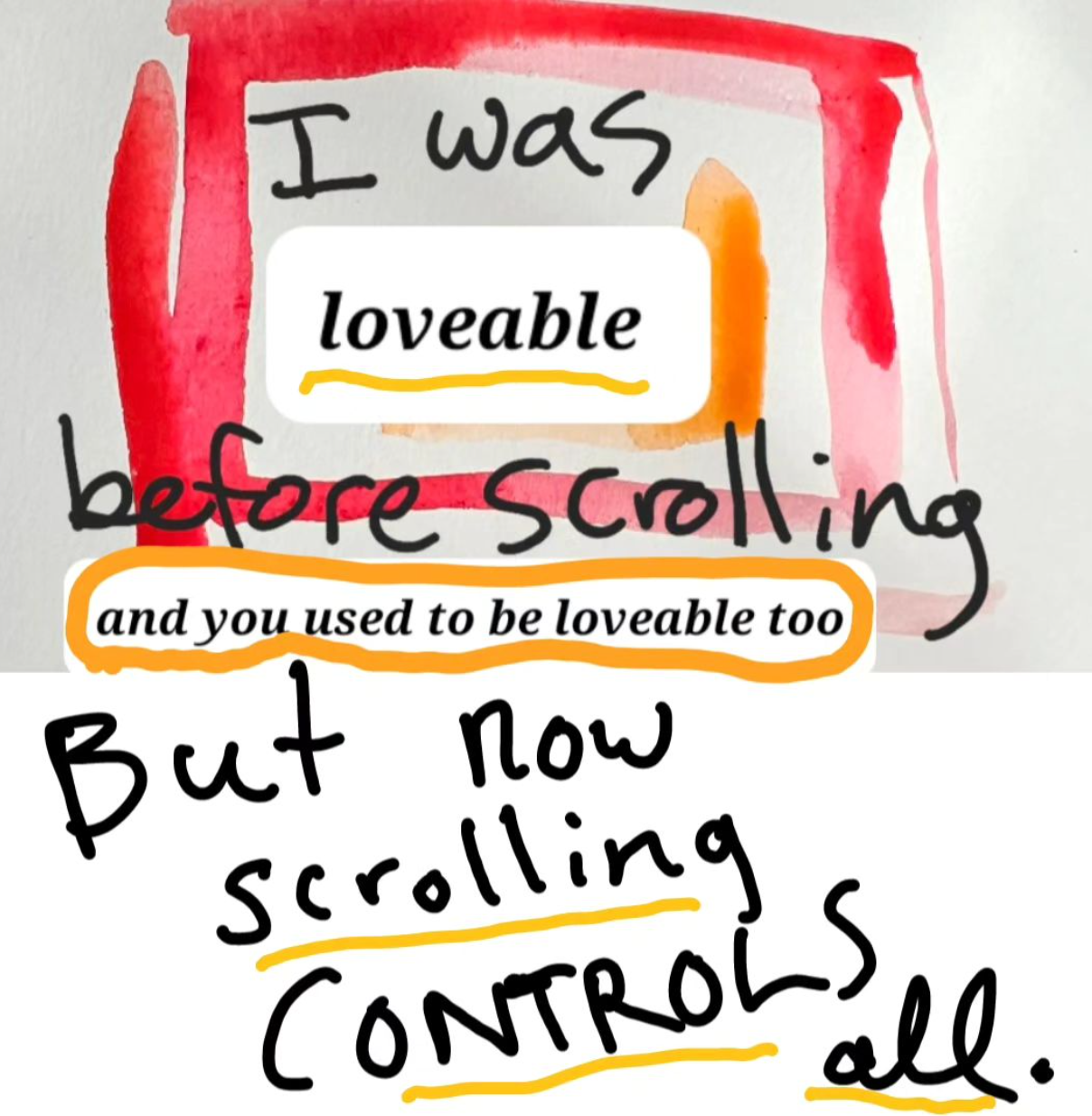
And here is the caption:
“The fewer people you like, the more time you spend online.😬 Self-righteousness is an algorithm success metric.🧡”
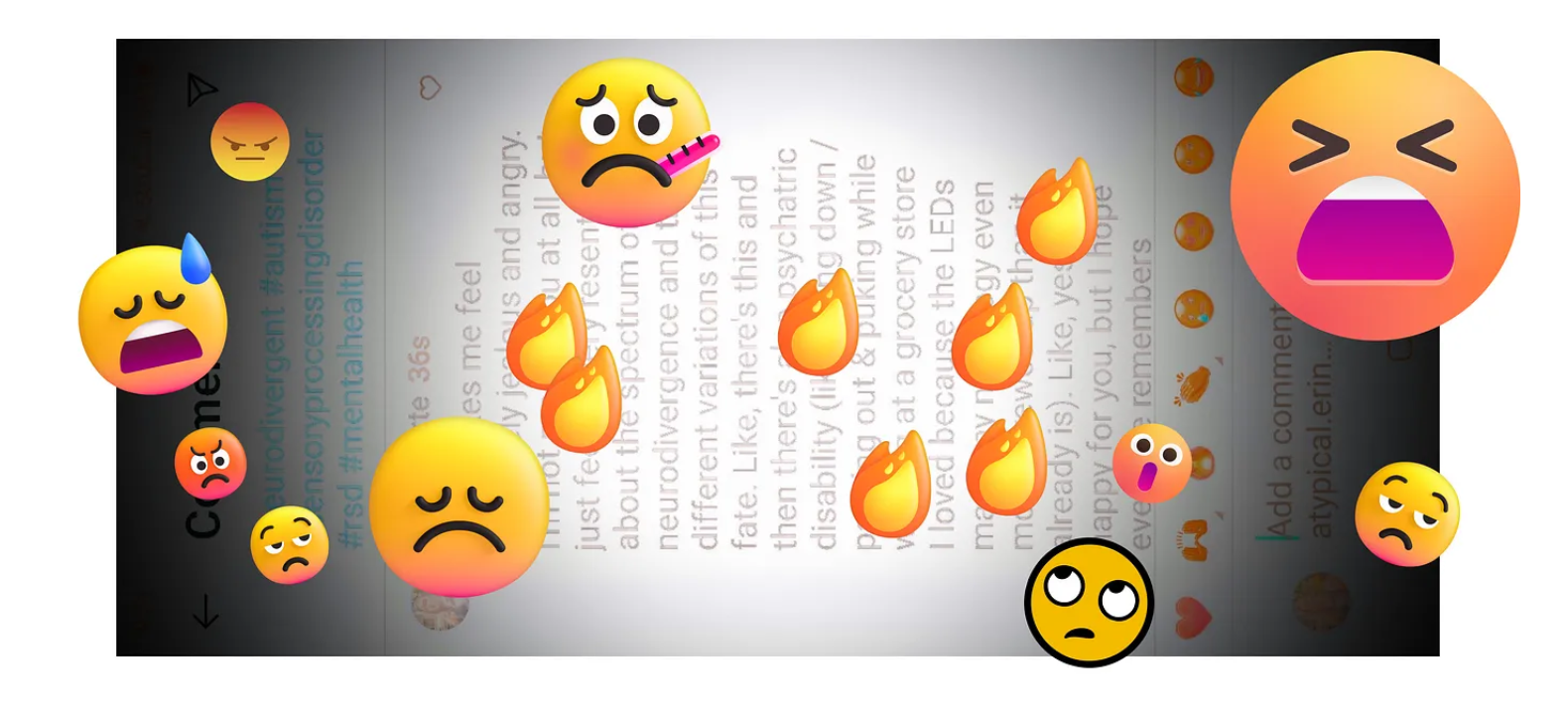
And here is the subsequent explanation in the comments:
[If this is a boring block of text, scroll past it. More below.]
I could go on and on.
It’s direct, logical, and a truth that no one is willing to admit yet because no one wants to feel unliked. Even WITHIN groups across the board, this is an exact reality. I’ve done the research and figured this out with plenty of detail. The way algorithmic feedback loops work, it impacts all people, even those offline. Unless a person is completely isolated, they are being continuously changed by indirect internet impacts.
Our niches are [rarely] people nearby — it’s people we need to log on to contact. Friends [physically near us] have niches, tensions are strained among all as the cycle compounds. Exponential division is happening and most people are too uncomfortable to admit it even to themselves. We are forgetting how much easier and more connected we ALL were before scrolling spiraled.
This is a socio-cultural, digital philosophy premise in the midst of happening. EVERYONE has slightly more enemies than a few years ago. It wasn’t just the pandemic.
Internet media in scroll format is exponentially niche and the feedback loop for the algorithm is tracking your time spent online, not happiness offline. The algorithm that curates our media feeds *do not get weighted points* for our offline connections. It is logic and there is a ton of evidence. “The Social Dilemma” documentary interviews is a tiny fraction of the puzzle. What’s more, noticing this pervasive global catastrophe is not a rewarding internet niche.
No one wins until we let ourselves ALL notice! The more we each create selective memory to pretend we are exempt, the worse it gets. I am only able to see this because I was removed from society ten years ago unrelatedly — and happen to be more stable than ever before. That is a randomly assigned perspective that has allowed me to lift the haze, even for enough moments at a time to call out to you.
Each person’s functionally invisible niche dictates their connections, enforced and enhanced by their feed (OR by feed-influenced humans in their non-digital life). The greatest positive feedback for the algorithm is the less time each of us spends offline. No one is exempt”
Our selective memories are being programmed to forget how much more connected life felt before scrolling programmed us.
We are being set to disconnection, deeper than ever, sent away from ease and into amygdala fear and hate — and, of course, the accompanying self-worship that exists to support increasing divisions.
The profits go to the billions of hours spent online instead. No one wants to admit it. It’s uncomfortable. Maybe it’s all other people — but you know better…
[How it might feel →
You have to prove your point, right? I mean, you owe it to the world to prove your point because… You’re definitely right, right? If only people could understand how much you know compared to them. You know way more than they know. I mean, do they even see the same content as you? How could they know all you know!!!
At least your favorite people all know. Your favorite people are contacting you online, though. Even your in-real-life best friend is calling through an app lately when you don’t want to drive…
More hours offered to the machine. This set of global choice machines, though, doesn’t know how it’s getting those results. It technically doesn’t even “know” anything at all, because the human safeguards have decide to make sure AI won’t become sentient.
Yet regardless of how, the results are that most of your niches are increasingly online. What’s more, it takes active effort at this point to meet or interact offline at all.
To add on — why would you waste time coordinating if you’re annoyed with the people physically near you? Going online just makes more sense.
The silent activity sitting down somewhere. Maybe standing. Maybe with sound. But only with sound while you’re actively creating, which most of us never do. Which, even so, is a fraction of a fraction of the time spent.
The more intricate subsets of desires and beliefs within a niche, the more time online. Any app is good. Just open your phone.
I think that I’m not wrong about any of this. And I think there are some clear and healthy solutions.
If you disagree, I’d love to understand why.
If you agree, please write and post about this too!
Ironically, an un-useful and intrinsically unrewarding super-niche would be calling out algorithmic harms.
[I think this problem is largely avoided on places like writing platforms because fracture-inducing media curation is most useful for video scrolling. But we are all still impacted by the division curation on other platforms, whether we are on them directly or not.]
And, what’s more, this is worse on platforms with fast scrolling to give further control to the algorithmic curation of your emotions, thoughts, feelings, and underlying programming.
Sometimes, I can practically feel my brain being rewired while I scroll.
From my perspective, the impacts almost seem exponentially increasing over time. Which makes sense because the feedback loops curves in between both humans and machines.
Let’s be clear: The algorithmic selection of content does not care what niche you’re in.
It will inevitably and invariably push you further into that niche. Any niche — really, whatever your current niche. It’ll just push you further in.
There is no way, really, to back out of your niche. Only to find a side niche. Which is great for more synthetic divisions.
We are all becoming exaggerated forms of our respective niches.
Even those offline, as mentioned, are then impacted by those in their near-niche online.
And the most innocent of niches are often totally insidious.
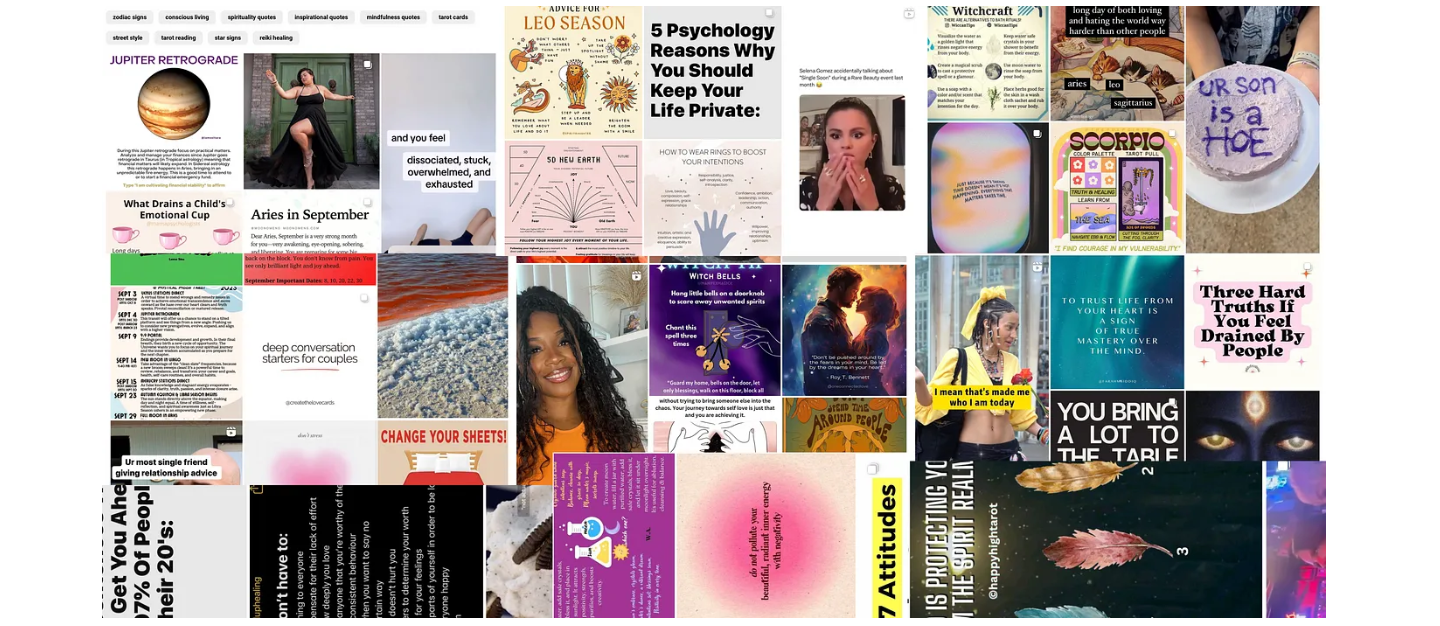
One clear example is white spirituality. Very, very dangerous, but easy to conceal as benign.
Maybe considered to be just “spirituality,” or “feminine spirituality.” But underneath the niche title, thousands of outpost data is being created, sorted, and employed to ruin our minds and, above all, our connections.
You can see where this goes.
You are centered in a Venn diagram of probably 4–5 larger niches and a few hundred smaller niches. In the center, you sit with your suggested content quickly scrolling by, isolated and online. Even if you meet up with friends later, the same ideas remain involved.
On a personal note, my biggest arguments in the past three years have all centered around an idea from suggested media.
Not from us, not from our friendships, nor even from our lived experiences or differences. The arguments stemmed from something we had read or seen or even noticed longer term due to something we were fed through our individualized feed.
At this point, my kindest friends or the people I meet that are the most open minded in real life are often the people who are in the weirdest, most obsessive, and least human-related niches.
Like, the *only sports* guys are actually nicer than the *I want to be a better person* guys at this point. That’s terrifying. The people who would’ve been online a lot either way for some random inanimate obsession (trains, bugs, etc.) are somehow now the least polarized.
To understand this all, we need to remember the magnitude of current-day processing power in large data models. Years ago, Facebook could already track what you wrote and then deleted before posting it. Even if you never posted it. They are tracking PLENTY.
The link above is a great TED Talk by Zeynep Tufekci. The title is “We’re building a dystopia just to make people click on ads.”
This talk has over three and a half million views and should have more. Even in 2017, scientists, researchers, and social-philosophers knew exact specifics of our approximately exponential downfall.
Even then, the data could predict post-partum depression months before any doctor, on average. This is nearing a decade ago! Imagine current day data observation and use for eyes-on-screens stickiness.
Technology advances quickly due to financial incentives for hundreds of thousands (millions…) of people working on all of these ideas all at once.
The more secretly dangerous, harmful, or divisive your niche can become — the more hours you will increasingly spend online.
But even normal niches are divisive.
Do all of the astrology girlies want their crushes to think they’re annoying and then console themselves online? No, but that’s exactly what happens.
Then they might go watch 15–100 readings in a row about how much he secretly likes you anyway.
I’ve heard about obsessive crushes from everyone, strangers, online, friends, cashiers, co-workers, and beyond. No one is exempt from dramatic scroll-enforced obsessions.
Do some contemporary guys think astrology is dumb? Depends on their niche leaders.
Well, maybe they do regardless of their leaders — but that’s a wider socio-political lens that doesn’t even need to be added into the existing danger of the now-divisive niche.
In a world where asking someone’s rising sign is no longer limited to middle-aged women in the outskirts of Southern California, division is being caused by a force beyond any human (beyond any celestial body, for that matter).
Synthetic divisions are not healthy for anyone. Ever.
Which is the algorithmic success and “reward” metric. Hours online is directly related to how annoyed you are with people offline.
It’s not even totally the algorithms’ fault, so to speak. It doesn’t even “know” the value of nor the measurement of our offline happiness (yet).
The algorithm doesn’t know any other goals aside from keep us online as long as possible. It also knows and applies, relatedly, billions (possibly more) other subset rules that help it do so.
Maybe the programmers should provide the algorithm with new goals and new data.
Like, that it should prioritize the offline happiness of your users.
Here is a page of a book fully annotated that explains much of this topic and more far more clearly than I. My solution is at the top of the page, hand written.

[Awosika, Ayodeji. “Chapter 1: Why Society Doesn’t Want You to Succeed.” Real Help: An Honest Guide to Self-Improvement, 2019, pp. 13.]






.JPG)

